
Waste Water Management (Bio Slurry Solutions)
Scalable, high-efficiency bio-slurry solutions that break down complex organic waste without harsh chemicals, restoring natural waterways and urban treatment systems for the long term.
A Biological Alternative to Chemical Treatment
In an era where natural waterways and urban systems face growing biological pressure, traditional treatment methods struggle to meet long-term sustainability goals. Modern community and commercial operators now need scalable, high-efficiency solutions capable of breaking down complex organic waste without harsh chemicals.
Advanced Waste Water Management systems use stabilized bio-slurry matrices to harness natural biological processes, restoring sewage treatment plants (STPs), sluggish rivers, and stagnant ponds steadily reversing environmental degradation while improving municipal utility performance.
What is Bio-Slurry?
A complex, nutrient-rich biological digestate. When introduced into distressed water systems, it forms highly active microbial populations alongside stabilized, bio-available nutrients including nitrogen and vital micronutrients.
Rather than masking odors or temporarily settling solids, it directly targets the root causes of poor water quality biochemical oxygen demand (BOD), chemical oxygen demand (COD), and excess suspended solids (TSS).
Waste Water Management (Bio Slurry- STP)
During heavy-load sewage treatment operations, bio-slurry serves as a powerful, highly-effective biostimulant that accelerates the breakdown of organic sludge in activated sludge reactors and anaerobic digesters, preventing heavy deposit buildup and maximizing biogas yields where energy recovery systems operate.
Accelerated Sludge Breakdown
Bio-slurry biostimulation accelerates the breakdown of organic sludge within activated sludge reactors and anaerobic digesters, preventing heavy deposit buildup at heavy-load facilities.
Maximized Biogas Yields
Where energy recovery systems operate, the enhanced digestion process maximizes biogas yields, turning sludge management into an energy asset.
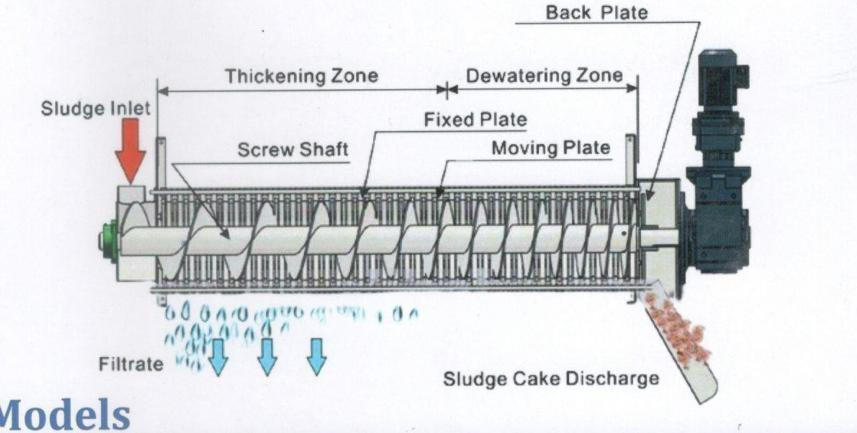
Technical Diagram: Multi-Disc Screw Press
The Super Nano Bubble Machine
What are Nano Bubbles?
Nano bubbles are ultrafine gas bubbles in liquids that remain stable for long periods. They possess unique properties including high gas-to-liquid transfer efficiency and a neutral buoyancy that allows them to penetrate sludge layers.
Waste Water Management (Bio Slurry- River)
In flowing and slow-moving channels, this formulation binds to the sediment at the riverbed, establishing persistent microbial colonies that keep working long after application continuously filtering pollutants, reducing turbidity, and gradually clearing the water above. In short, it seeds the riverbed so it cleans itself over time.
Persistent microbial colonies establish in riverbed sediment, filtering pollutants long after a single application.
Floating Trash Barrier (FTB)
How it works
Designed to optimize trash collection in flowing rivers and canals. The barrier is resilient to varying water levels and currents, funneling floating debris to a centralized collection point.
| Mesh Depth | 900 mm to 1500 mm |
| MOC Mesh | High Strength Synthetic / SS 304 |
| Float Material | UV Stabilized Virgin HDPE |
| Breaking Strength | Up to 25 Tons |
| Installation Type | Fixed or Dynamic Bank Mooring |
Waste Water Management (Bio Slurry- Lake)
Still water and excess nutrients are a bad combination, triggering toxic algal blooms and oxygen depletion. Bio-slurry stabilizes that nutrient load, letting healthy biological productivity take hold. Over time, the system moves away from eutrophication and starts running on its own.
-
eco
Nutrient Load Stabilization
Stabilizes excess nutrients that would otherwise trigger toxic algal blooms and oxygen depletion.
-
bubble_chart
Reverses Eutrophication
Restores healthy biological productivity, gradually moving the water body away from eutrophication.
-
water
Self-Sustaining System
Once nutrient load is stabilized, the water body starts running on its own with minimal further intervention.
Floating Skimmer For Ponds
Debris Removal
Automated collection of floating leaves and plastics.
Algae Control
Skims surface algae blooms to improve light penetration.
Water Clarity
Removes the primary source of water cloudiness.
Prevent Clogging
Protects downstream pumps and filtration units.
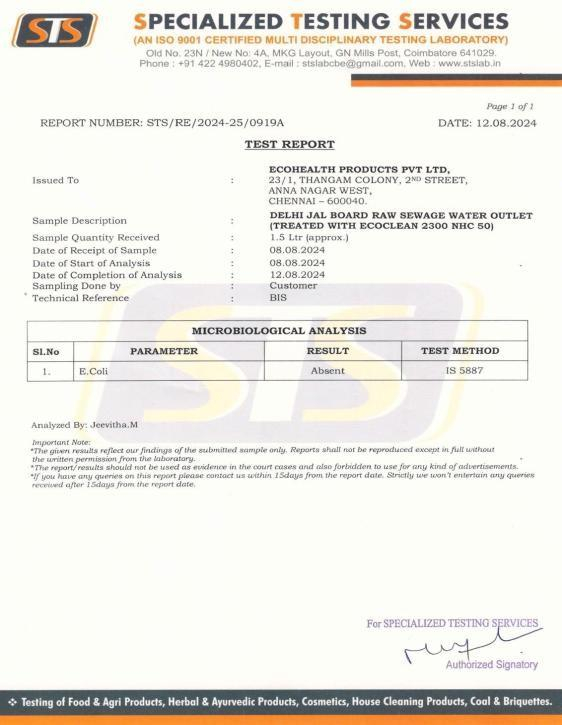
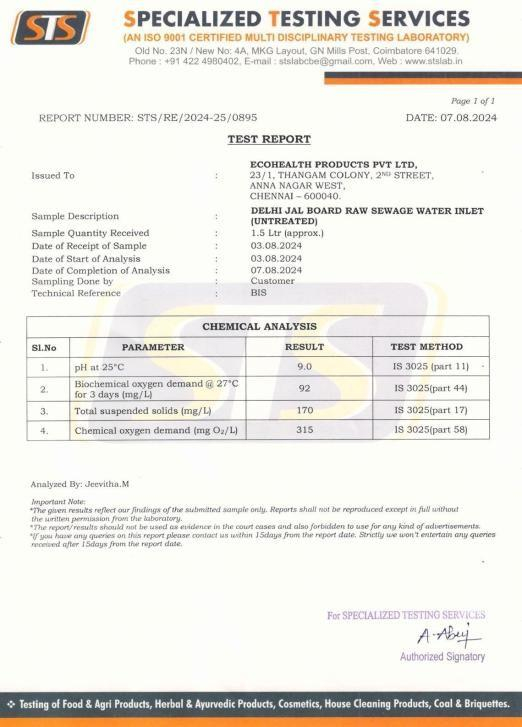
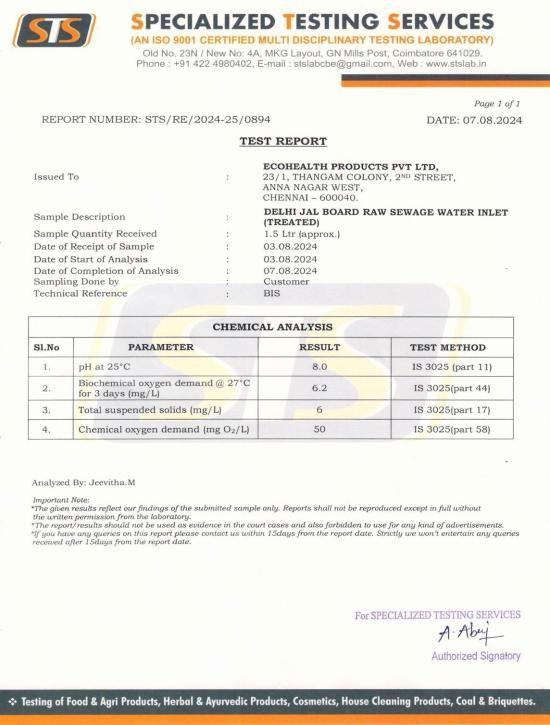
Analysis Report of Delhi Jal Board STP
Verified performance metrics at national capital facilities.
| Parameter | Untreated Water | Treated Water (ACSG) | Reduction % |
|---|---|---|---|
| pH | 7.82 | 7.15 | - |
| BOD (mg/l) | 280 | 12 | 95.7% |
| COD (mg/l) | 640 | 48 | 92.5% |
| TSS (mg/l) | 420 | 18 | 95.7% |
| E-coli (MPN/100ml) | 10ⶠ| <100 | 99.9% |
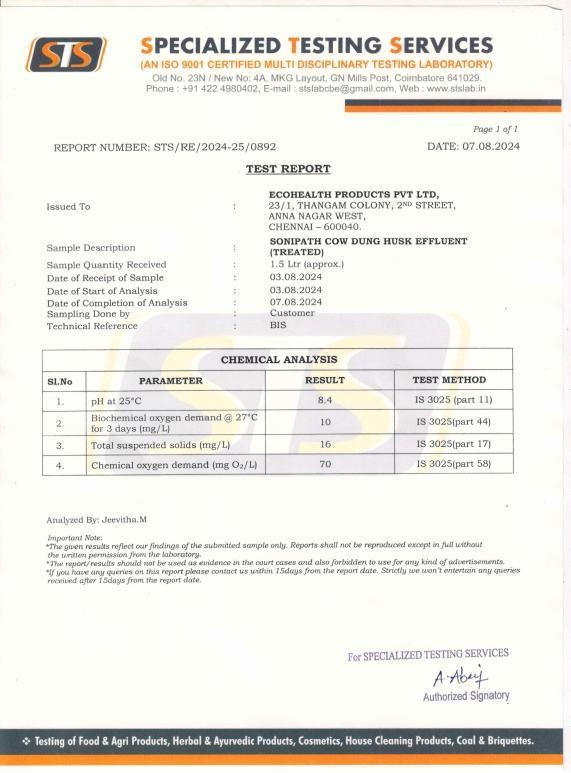
Analysis Report of Sonipat (Gohana) STP
Compliance with National Green Tribunal (NGT) Standards.
| Parameters | Untreated | Treated |
|---|---|---|
| pH | 7.9 | 7.2 |
| BOD | 245 | 9 |
| TSS | 380 | 14 |
| COD | 590 | 42 |
NGT Standard Compliance
Our treatment protocols consistently exceed the stringent standards set by the National Green Tribunal, ensuring that discharge water is safe for irrigation and groundwater recharge.
From Waste Liability to Valuable Asset
The shift to this biological method cuts residual sludge way down, which matters because sludge disposal is one of the worst cost centers in conventional operations. Where traditional treatment leaves behind toxic, chemical-laden sewage sludge as a severe liability, this advanced application guarantees the remaining byproduct transitions into a safe, nutrient-dense organic fertilizer turning a waste liability into a valuable asset for local agriculture or aquaculture.
This marks a decisive shift from the old playbook of reactive, energy-intensive filtration towards circular, regenerative water management. Chemical-free remediation means no secondary toxicity killing off ecosystems, so compliance with tightening environmental rules happens naturally without the capital expense of building new facilities or overhauling energy systems.
Sludge Becomes Fertilizer
The remaining byproduct transitions into a safe, nutrient-dense organic fertilizer for agriculture or aquaculture.
Existing Infrastructure, Higher Capacity
The real leverage is in the biology already present existing infrastructure handles higher volumes as microbial degradation capacity is pushed to its natural ceiling, remaining stable through temperature fluctuations from climate shifts.